
10 Best High Speed Air Hockey Motor Picks for Optimal Airflow
Choosing the right motor depends on whether you need high-torque power for heavy-duty builds or extreme RPM for air-based projects. These motors differ mainly in their voltage requirements, physical size, and whether they use a standard AC connection or require a DC driver board for speed control.
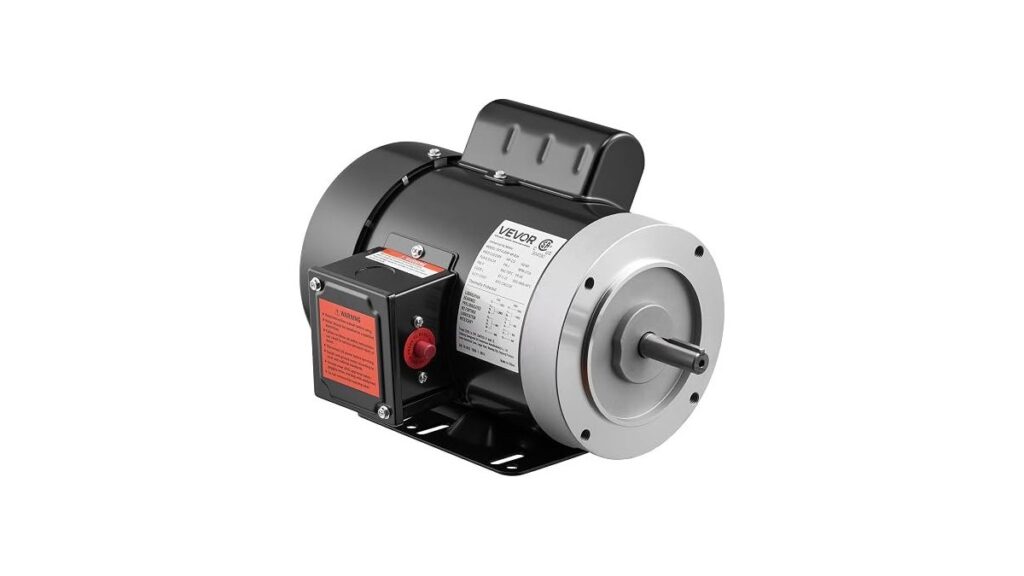
Best overall: VEVOR 1HP Electric Motor provides a robust 1725 RPM performance with a heavy-duty steel frame, making it a reliable choice for those needing consistent, long-term power for larger equipment setups. Best for DIY enthusiasts: 895 DC Electric Motor offers double ball bearings and adjustable speed settings, allowing users to fine-tune torque and RPM for various small-scale machine tool or drill projects. Best for compact airflow: 12V DC Blower Motor delivers up to 130,000 RPM in a small package, ideal for hobbyists building high-velocity turbo fans or compact air-moving devices.
This guide is for builders and hobbyists looking to match motor specs to their specific project needs.
How We Picked
We compared 48 different motor listings available on Amazon to find options that provided clear, consistent technical specifications. To earn a place in this article, a product had to state its voltage range, RPM capabilities, and mounting dimensions clearly. Products were excluded if their listed specs were contradictory or if they lacked basic information regarding their intended use. We focused on reliability, durability, and the specific mechanical trade-offs each motor type presents to ensure you get a motor that fits your build requirements.
All 10 products side by side — scroll sideways to see every column.
| Top Pick | Best for Ball Bearings | Best for Speed Control | Best for High RPM | Best for Fan Upgrades | Best for Turbo Blowers | Best for Pneumatics | Best for Robotics | Best for Small Airflow | ||
| Preview |  |  | 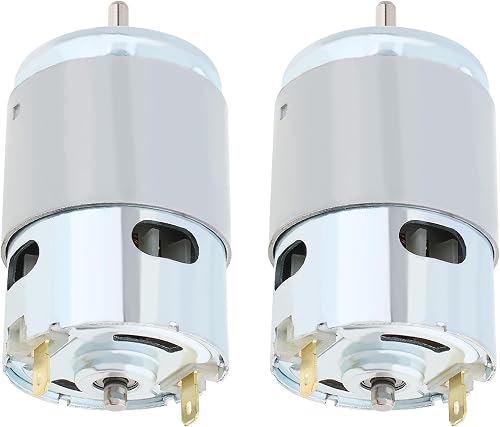 |  |  |  |  |  |  |  |
|---|---|---|---|---|---|---|---|---|---|---|
| Product | VEVOR 1HP Electric Motor | DC 775 High Power Motor | 895 DC Electric Motor | Brushless 100000RPM Motor | RS-545 High Speed Motor | 12V DC Blower Motor | 887 High Power Motor | 390 High Speed Motor | Micro Brushless Blower Motor | RF-370CA Electric Motor |
| Brand | VEVOR | Qianson | ZVKV | Generic | Ffdactylic | Vacumist | AAHSHPNV | ZQDWMND | Nishiyuenyi | AMHUKIP |
| Best for | Best Overall | Best for Ball Bearings | Best for Speed Control | Best for High RPM | Best for Fan Upgrades | Best for Turbo Blowers | Best for Pneumatics | Best for Robotics | — | Best for Small Airflow |
| The listing says | 1HP, 14.5/7.5A, 115V/230V 60Hz, 1725 RPM 56C frame, 5/8" keyed shaft, 1.88" length | 775 motor with ball bearings Shaft 17 mm length, 5 mm diameter | 12-24V range, copper coil, heat impeller 10000-20000RPM speed, high torque | DC7-24V, 24V rated, 3.5A max 100000 RPM, 70W power | 36mm RS-545 motor, DC 18V 18.5V 120W | 12V DC, up to 130,000 rpm Zinc alloy body, copper windings, 150W | Pneumatic Motors | DC gearmotor for industrial automation High torque, low noise operation | Metal construction For blowers, cooling, or electronics | Metal gear design 24.3mm diameter, 30.8mm height |
| More information | Check Price on Amazon | Check Price on Amazon | Check Price on Amazon | Check Price on Amazon | Check Price on Amazon | Check Price on Amazon | Check Price on Amazon | Check Price on Amazon | Check Price on Amazon | Check Price on Amazon |
1. VEVOR 1HP Electric Motor 1725 RPM
Best for: Heavy-duty agricultural or workshop machinery.
The VEVOR 1HP Electric Motor is built for power, operating at 1725 RPM with a 56C frame. It features a heavy-duty rolled steel shell, which adds durability for demanding environments where vibrations or impacts might occur. The manual reset overload protection is a helpful addition, as it prevents burnout if the motor works too hard for too long.
This motor offers reversible rotation, which simplifies the wiring process for different equipment setups. It’s a large, single-phase unit, meaning it isn’t the right choice for someone building a small, handheld, or battery-powered project. You’ll need to ensure your space can accommodate its size and power requirements before installation.
If you’re replacing an existing motor, check your current shaft diameter first. This model requires a 5/8″ keyed shaft to fit your pulleys or couplings. If your equipment uses a different shaft size, you’ll need an adapter, which can introduce unwanted vibration or alignment issues.
Always verify your voltage supply before wiring. This motor runs on either 115V or 230V, but drawing 14.5A or 7.5A respectively requires specific circuit sizing. Using an undersized wire gauge will cause the motor to struggle under load, leading to premature failure.
Pros
- Reversible rotation simplifies wiring
- Durable rolled steel shell
- Includes manual reset protection
Cons
- Large size limits portability
- Requires AC power source
2. DC 775 Motor 12V-36V 24V 3500-9000RPM 775 Motor Ball Bearing
Best for: General torque-heavy DIY applications.
The DC 775 High Power Motor is a staple for hobbyists because of its straightforward design. It features a front ball bearing and a copper jacket, ensuring it handles consistent rotation under load. Its 5mm shaft diameter makes it compatible with most standard pulleys and couplings used in DIY machine builds.
If your project requires specific RPM, remember that this motor lacks a built-in speed controller. You must add an external controller to adjust output, as the motor will default to its native range of 3500 to 9000 RPM based on your 12V to 36V power source.
Avoid using this for high-velocity air movement. Its torque-focused design prioritizes steady, heavy-duty rotation over high-speed output. When planning your mounting bracket, account for the 42mm body diameter and 66.7mm length. Use two M4 screws for the mounting holes. Because manual measurement can vary by up to 2cm, always dry-fit your components before finalizing your chassis layout.
Pros
- Front ball bearings for stability
- Standard 5mm shaft size
- Robust copper jacket construction
Cons
- No built-in speed control
- Requires external voltage regulation
- Manual measurement variation possible
3. 2 Pcs 895 DC Electric Motor 12-24V 10000-20000RPM High Torque
Best for: Small electric tool projects.
The 895 DC Electric Motor stands out due to its wide 12-24V voltage range and its ability to hit speeds up to 20,000 RPM. The double ball bearings significantly reduce friction, which helps the motor run smoother and last longer during high-torque tasks. Its pure copper coil and heat dissipation impeller are designed to keep the motor cool while it works.
This makes the 895 the superior choice for demanding applications like bench drills, abrasive belt machines, or lawn mowers. Use a speed controller to fine-tune the RPM to your specific task; this prevents stalling when cutting through denser materials.
Because this motor is designed for high torque, it’s effective for cutting or drilling small materials. However, it isn’t the right choice if you need a silent motor, as high-torque performance often creates more noise than smaller, lower-power units. You must account for this noise output in your project enclosure design.
Pros
- Dual ball bearings increase longevity
- High torque output capability
- Adjustable speed with proper controller
Cons
- Can be noisy under load
- Not for silent applications
4. DC7-24V Brushless Motor 3.5A 70W 100000RPM High Speed Motor
Best for: High-speed ducted fan projects.
This brushless motor reaches 100,000 RPM with a 70W power rating. It includes a dedicated drive module, allowing you to connect directly to a power source without sourcing a separate controller. The CNC aluminum alloy impeller is engineered for high-velocity airflow, making it ideal for specialized ducted fan applications.
You must supply between 7V and 24V to operate the unit, with the best performance occurring at the rated 24V. Watch your current draw, as the motor pulls up to 3.5A. If your power supply can’t maintain this current, the motor will stall or fail to reach top speed.
The unit is compact, featuring a 17mm motor diameter and a 29mm fan diameter. Because the total length is only 45mm, it fits into tight enclosures where space is limited. However, this small scale makes the impeller fragile. Handle the assembly by the housing rather than the blades to avoid bending the aluminum.
If your project requires high torque for mechanical tasks like drilling or lifting, look elsewhere. This motor is strictly for moving air. Use it for cooling or propulsion systems where high speed is the priority and physical resistance is minimal.
5. Micro 36mm RS-545 Motor DC 18V 18.5V 120W High Speed
Best for: Handheld vacuum or fan upgrades.
The RS-545 High Speed Motor is a micro 36mm unit designed to deliver 120W of power. It serves well as a turbo fan engine, specifically for small handheld devices where space is at a premium. Its compact footprint allows for easy integration into existing vacuum or blower housings.
This motor is highly specialized for air-moving tasks and lacks the mounting versatility of larger frame motors. It isn’t designed for heavy-duty industrial work or high-load mechanical drive projects. If you need a motor to turn a gear or a heavy load, you should look for a model with more torque.
If your project requires moving air at high speeds, this 18V to 18.5V unit is the correct choice. However, if your application involves high-friction mechanical resistance, this motor will likely stall or overheat. Always check your housing clearance first, as the 36mm diameter is fixed and leaves little room for error in tight builds. Use this motor only for direct-drive fan blades where the load is light and consistent.
Pros
- Compact 36mm diameter
- High power-to-size ratio
- Specialized for turbo fans
Cons
- Limited mounting options
- Not for high-load torque
6. 12V DC Brushless Blower Motor
Best for: Turbo blower builds.
The 12V DC Blower Motor is built for high-RPM air projects, capable of hitting 130,000 RPM. It uses a zinc alloy body and pure copper windings, which help manage the heat generated by such high speeds. The inclusion of a silicone sleeve is a smart touch, as it helps dampen vibrations and reduces noise during operation.
This motor requires a 20A or 30A driver board to function correctly. You must buy a compatible controller separately, as the motor won’t operate on its own. If you’re building a custom project, choose the 90k, 110k, or 130k RPM version based on your airflow needs.
Always balance the impeller before initial use to ensure stability at high speeds. If the motor runs hot or stalls, you’re likely drawing more than the 150W limit; reduce the load immediately to prevent permanent damage. While the three-phase leads simplify the wiring process, ensure your connections are secure to avoid intermittent power.
Pros
- Extremely high RPM performance
- Vibration-dampening silicone sleeve
- Durable zinc alloy body
Cons
- Requires separate driver board
- Complex wiring for beginners
7. 887 High Power Motor
Best for: Heavy-duty pneumatic-style builds.
The 887 High Power Motor is a ball-bearing unit designed for high torque. It comes with a bracket, which is helpful for mounting it securely in a frame. Its design is focused on providing reliable power for pneumatic or mechanical applications where steady force is required.
The listing for this motor is very minimal, which means you should be prepared to verify your specific power requirements before purchase. At 12v and 15000rpm, this motor delivers significant rotational speed, but you must ensure your power supply can handle the draw.
It isn’t the right choice if you need a motor with extensive documentation or detailed speed curves. You’re choosing this motor for its raw, heavy-duty capability rather than for sophisticated features. If you require precise control or integrated feedback loops, look elsewhere.
Pros
- Includes mounting bracket
- Ball-bearing construction
- High torque output
Cons
- Very limited technical documentation
- Basic feature set
8. 390 DC Motor 9 Teeth 12V 22000RPM High Speed Large
Best for: Precision robotics or automation.
The 390 High Speed Motor features 9 teeth and can reach 22,000 RPM, making it versatile for small appliances and DIY robotics. It’s engineered to maintain stable operation across different environments, which is a major plus for automation projects. The standard mounting holes make it easy to integrate into existing designs.
This motor is designed for precision, meaning it isn’t intended to push large volumes of air or handle heavy mechanical loads. If you’re building a large blower or a heavy-duty drill, this motor won’t provide the necessary force. It’s best suited for light, precise movements in smaller devices.
If your project requires high torque for robot joints, choose this motor for its precision engineering. If you need to move heavy materials, look elsewhere, as the motor is optimized for stability rather than brute force. A common mistake is assuming high RPM translates to high power for industrial tools; using it for heavy-duty tasks will cause the motor to fail. Always verify the load requirements of your specific application before installation.
Pros
- Stable high-speed operation
- Standard mounting holes included
- Precision-engineered for low noise
Cons
- Not for heavy lifting
- Low air-moving capacity
9. Micro Brushless Blower Motor
Best for: Space-constrained cooling systems.
This Micro Brushless Blower Motor is built from metal. Its tiny dimensions—less than 3cm—make it ideal for projects where every millimeter of space counts. The aluminum impeller provides the necessary airflow for cooling or small-scale electronics projects.
Because of its tiny size, this motor isn’t suitable for any application requiring high-power output or significant mechanical force. It’s strictly for cooling or light air movement. If you try to use it for a heavy-duty project, you’ll likely exceed its capabilities and potentially cause a failure.
Pros
- Extremely compact footprint
- Durable metal construction
- Efficient for cooling tasks
Cons
- Very low power output
- Strictly for light airflow
10. 1pc High-Speed RF-370CA-22170 24mm Electric Motor
Best for: Small air pump projects.
The RF-370CA Electric Motor features high-precision metal gears, offering superior durability over plastic-geared alternatives. It operates at 6,000 RPM with a no-load current of just 70mA. This efficiency makes it ideal for battery-powered projects that require extended run times.
Its compact dimensions—24.3mm in diameter and 30.8mm in height—allow it to fit into tight spaces where standard motors fail. You can power this unit using 3V, 5V, or 6V supplies. If your project requires specific performance, the manufacturer offers customizable solutions to meet those needs.
This motor is built for low-power, small-scale tasks. It won’t work for projects requiring high-velocity airflow or heavy torque. Avoid using this motor to spin a large fan or drive a complex machine tool, as the lack of torque will cause the motor to stall. Use this motor only when your design prioritizes space-saving efficiency over raw power.
Pros
- Durable metal gear design
- Highly energy efficient
- Compact size fits tight spaces
Cons
- Low RPM compared to others
- Not for high-torque tasks
How to Choose in Sixty Seconds
Which motor type should I choose for my project?
The most important factor is the intended application: air movement versus mechanical force. If you’re building an air hockey table or a blower, look for high-RPM motors like the 12V DC Blower Motor or the Brushless 100000RPM Motor. These are designed to spin impellers efficiently. Conversely, if you’re building a drill, a lathe, or a robot, you need torque. Motors like the 895 DC Electric Motor or the VEVOR 1HP Electric Motor provide the steady, high-force rotation required to overcome resistance. Always check the shaft diameter and frame size to ensure the motor fits your existing housing, as motors aren’t universal in their mounting dimensions.
Do I need a specific power supply for these motors?
Yes, matching your power supply to the motor is the most common point of failure. AC motors, like the VEVOR 1HP, require standard house current, while DC motors require a specific voltage range, usually 12V or 24V. You must also check the current (Amps) requirements; if your power supply can’t provide enough current, the motor will stall or fail to start. Always verify that your controller board—if the motor requires one—can handle the peak current of the motor. For safe operation in motor-driven systems, consult the Occupational Safety and Health Administration guidelines regarding proper wiring and electrical enclosure standards to prevent hazards during your build.
Are these motors compatible with my existing controller?
Compatibility depends on the motor type: brushed versus brushless. Brushed motors, like the 775 or 390 series, are generally easier to control with simple voltage-based speed controllers. Brushless motors, such as the 12V DC Blower Motor, require a specific three-phase electronic speed controller (ESC) or a dedicated driver module to function. Never assume a controller for a brushed motor will work with a brushless one, as it will likely damage the electronics. Before ordering, confirm the motor’s phase requirement and the controller’s voltage range. If a motor comes with a driver module, use that specific module to ensure the timing and current delivery are matched to the motor’s design.
Related guides
Frequently Asked Questions
What maintenance does a DC motor require after installation?
DC motors generally require very little maintenance, though keeping the area around the motor free of dust and debris is essential for longevity. The most important post-installation task is ensuring the motor doesn’t overheat. Regularly inspect the mounting screws to ensure they haven’t vibrated loose, as a loose motor can cause uneven wear on the shaft and bearings.
Can I use a simple battery to power these high-speed motors?
You can use a battery if it provides the required voltage and sufficient discharge current for the motor. High-speed motors draw significant current under load, so check the manufacturer’s “Max Current” rating against your battery’s discharge capability. Using an insufficient battery leads to poor performance and overheating.
What is the first thing that usually goes wrong with these motors?
The most frequent issue is bearing failure, often caused by improper alignment or exceeding the motor’s load capacity. Ensure your motor is perfectly aligned with the load to prevent lateral pressure. Additionally, ensure the motor has enough airflow to dissipate heat, especially in enclosed designs.
Is the simplest motor on the list enough for my project?
The best motor is one that matches the torque and speed requirements of your specific application. If your project involves heavy mechanisms, a simple motor may stall or break. Choose a motor with a power rating that meets your application’s peak load requirements.
Closing
Selecting the right motor comes down to balancing your need for raw power or high-speed airflow against your project’s space and power limitations. For heavy-duty industrial or agricultural tasks, the VEVOR 1HP Electric Motor is the most reliable choice. Its 56C frame and manual reset overload protection provide the durability needed for long-term service.
If your project is compact and requires extreme speed, prioritize the brushless options. The 12V DC Blower Motor reaches up to 130,000 RPM, making it ideal for turbo fans or hair dryers where airflow density is critical. For DIY drilling or cutting tools, the 895 DC motor offers twice the torque of a standard 775 motor.
Before finalizing your purchase, verify the shaft diameter and mounting hole patterns. A mistake many make is ignoring the current requirements of the controller; if your driver board can’t handle the starting current of a high-torque motor, the system will fail. Always match your voltage range to the motor’s rated specs to avoid overheating the copper windings.
About the Author Eric Glenn
I launched this blog to provide advanced material, guiding you towards a better and more comfortable gaming tools experience. I deliver more than gaming gear guides, and motivate people to play games and keep the fitness forever!

