
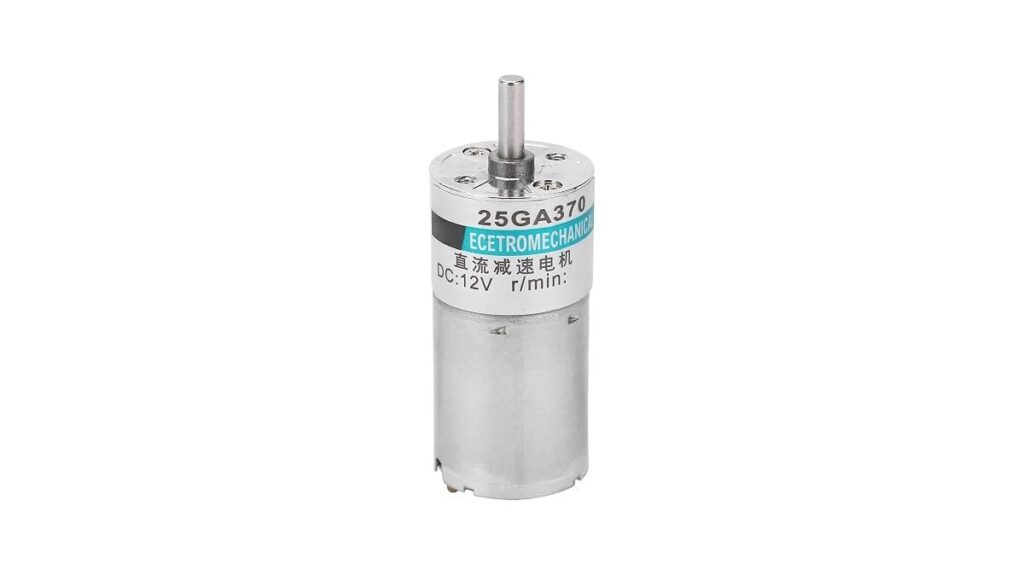
10 Best Quiet Motor for Air Hockey Picks for Smooth Gameplay
Finding the best quiet motor for air hockey depends on your specific setup, as no single motor fits every air hockey table perfectly. You must weigh factors like your power supply voltage, the required torque to spin your fan blades, and the physical space available inside your table housing. These motors differ primarily in their internal construction—brushless options typically offer longer life and less friction noise, while geared models provide the steady torque needed for larger air systems. If you need a simple swap for a standard home table, the 12V DC Gear Motor is a common starting point, whereas those building custom, high-speed tables often prefer the performance of the Mini Inner Rotor Motor.
All 10 products side by side — scroll sideways to see every column.
| Top Pick | Best for High Torque | Best for High RPM | Best for Speed Control | Best for D-Shaft | Best for Reversing | Best for Air Pumps | ||||
| Preview |  |  |  |  |  |  |  |  |  |  |
|---|---|---|---|---|---|---|---|---|---|---|
| Product | 12V DC Gear Motor | DC 12V Brushless Motor | Quiet Brushless DC Motor | DC9-28V Brushless Fan Motor | Brushless DC Gear Motor | K-300CA-10500 Mute Motor | Low Noise Reversible Motor | 885 Carbon Brush Motor | RF-370CB-11670 Quiet Motor | Mini Inner Rotor Motor |
| Brand | OPPWONG | HFUOACD | Vacumist | VEYFIY | Domary | Hudew | Generic | SundiooK | KUSTAT | JCKJEDAT |
| Best for | Best Overall | Best for High Torque | Best for High RPM | Best for Speed Control | Best for D-Shaft | — | Best for Reversing | — | Best for Air Pumps | — |
| The listing says | Intelligent 3a overcurrent cutoff High temperature grease lubrication | High torque and low noise All metal gears | 90,000, 110,000, or 130,000 RPM options Integrated turbofan structure | Brushless technology reduces power consumption Stepless gear and three-button control | Built-in drive and dual protection 4mm diameter D shaped shaft | Model number RK-300CA-10500 Permanent magnet construction | DC 24V motor with helical gears Robust all-metal rust resistant shell | Strong rotational force output Built-in cooling fan | 15mm shaft length 53g weight | Smooth and quiet operation Requires external brushless drive |
| More information | Price on Amazon | Price on Amazon | Price on Amazon | Price on Amazon | Price on Amazon | Price on Amazon | Price on Amazon | Price on Amazon | Price on Amazon | Price on Amazon |
1. 12V DC Gear Motor
Best for: Someone replacing a standard motor in a home air hockey table.
This motor is designed for consistent operation, using a brushless system that cuts power if the current hits 3a. This safety feature helps protect the internal components during electrical surges, which is helpful if your table’s power supply isn’t perfectly stable. The metal gears are lubricated with high-temperature grease, intended to keep noise levels low while the motor runs continuously during a game.
The internal pure copper coil stator and rotor are built to handle the deceleration resistance often found in fan applications. It’s a solid choice for those who want a reliable, steady motor without needing advanced controller knowledge. However, it may not be the right fit if your table requires a very high RPM for extreme air pressure, as this model is optimized for steady, controlled torque.
Good if:
- You want built-in overcurrent protection.
- You need a motor with all-metal gears.
- You prefer a simple, brushless design.
Skip it if:
- You need extreme, high-speed airflow.
- Your project space is exceptionally limited.
2. DC 12V Four Wire brushless Micro mini dc Motor Fan
Best for: Builders who have very little room inside the table housing.
This is a compact option that provides high torque. It uses a high-precision gear design and a pure copper wire core to keep the motor running efficiently. Because it’s a brushless design, it’s intended to provide a longer service life than traditional brushed motors, which is useful if you plan to play frequently.
The motor also allows for positive and negative rotation by simply changing the wiring. This flexibility is helpful if you’re mounting the fan in a non-standard position or need to reverse the airflow direction.
It isn’t the best choice for those who need to move massive volumes of air, as its primary strength lies in its small, high-torque form factor rather than high-velocity output. Use this motor when you have less than three inches of clearance behind your mounting plate. If you require sustained, high-volume cooling for a full-size professional table, the small gear box may overheat under the constant load.
Good if:
- You have very tight space constraints.
- You need the ability to reverse rotation.
- You want a high-torque, compact build.
Skip it if:
- You’re cooling a full-size, professional-grade table.
- You aren’t comfortable with custom wiring.
3. Quiet Brushless DC Motor 12V Long Life No Brushes
Best for: Users who prioritize the lowest possible noise during long sessions.
By eliminating carbon brushes, it reduces friction, which helps the motor maintain performance levels during operation.
The metal construction resists overheating, making it a stable choice for continuous operation in automotive, industrial, or compact electronic environments. If your application involves server racks or LED lighting, the Vacumist design provides the necessary cooling power without excess energy consumption.
Choose the 90,000 RPM option for standard cooling tasks where power efficiency is the priority. Select the 130,000 RPM model when you’re managing heat-heavy industrial hardware that requires maximum airflow.
It isn’t ideal for someone looking for a simple, low-speed motor to gently circulate air. This is a specialized tool for those who need serious cooling power for their gaming surface or compact computers.
Good if:
- You need very high RPM performance.
- You want a motor that runs cool.
- You value a long-lasting, brushless design.
Skip it if:
- You only need a basic, slow-speed replacement.
- You lack a compatible 12V DC power source.
- Your system can’t accommodate a high-performance turbofan structure.
4. DC9-28V Brushless Fan Motor 1450RPM Quiet(Standard)
Best for: Those who want to control the air speed precisely.
This motor stands out because it supports a wide voltage range and features stepless gear regulation. If you find your current fan is either too noisy or not blowing enough air, this motor allows you to tune the speed to find the perfect balance. It includes a built-in drive board, which simplifies the setup process for many DIY enthusiasts.
The metal housing is designed for long-term use in various fan types. It’s a versatile choice if you’re upgrading an old table, floor, or wall-mounted unit, as it supports oscillating functions and direct terminal connections.
If your power source fluctuates, rely on the built-in reverse connection protection. This feature functions across an 8-40V range, keeping the motor safe even if the input spikes outside the standard DC 9-28V window.
Use this motor if you need to replace an aging AC component with a more energy-efficient brushless model. If you require a simple “plug and play” motor that functions without any speed adjustment or control setup, look elsewhere.
Good if:
- You want adjustable speed control.
- You need wide voltage compatibility.
- You’re upgrading an existing fan system.
Skip it if:
- You prefer a basic, non-adjustable motor.
- You aren’t interested in DIY installation.
5. Brushless DC Gear Motor
Best for: Robotics enthusiasts or those building custom gaming tables.
This motor features a 4mm diameter D-shaped output shaft, which ensures that components like fan blades or gears stay securely attached during high-speed operation. It includes a built-in drive and Hall signal output, giving you precise feedback and control over the motor’s performance. The internal gears are crafted from high-quality all-metal materials to withstand significant wear, making this a reliable workhorse for long-term use.
The motor is highly energy-efficient, providing significant torque output despite its compact size. This makes it an ideal fit for projects like model cars or advanced robotics where you need consistent, powerful performance without a heavy power draw.
If your project requires only basic, constant rotation without speed regulation or external feedback, this motor is likely overkill. You’re paying for advanced control features that remain dormant in simple builds. Use this model when you need to integrate speed regulation or require the specific durability of an all-metal drivetrain.
Good if:
- You need a secure, 4mm D-shaped shaft.
- You want feedback via Hall signal output.
- You need high torque with low energy use.
Skip it if:
- You don’t need advanced motor control.
6. K-300CA-10500 RF-300C Small Mute 24mm Round Spindle Motor DC 6V-24V
Best for: A quick, simple replacement on a standard home table.
This micro motor is a straightforward design that uses traditional carbon brushes. It’s a permanent magnet type, which is common for simple home appliances and DIY fan projects. Its small size makes it easy to fit into most standard table housings without complex modifications.
Because it uses brushes, it’s a very simple device to install and test. If you’re swapping out a dead unit, the two-terminal connection allows for an immediate, solder-free test using a standard DC power supply between 6V and 24V.
However, it doesn’t offer the advanced speed control or the long-term wear resistance of the brushless options on this list. The carbon brushes will eventually wear down through friction, meaning this motor is best suited for intermittent use rather than continuous, heavy-duty operation.
It’s best suited for someone who wants to get their table running again with minimal effort and complexity.
Good if:
- You want the simplest installation possible.
- You need a basic, compact 24mm round motor.
- You’re replacing a motor in a simple table.
Skip it if:
- You want the longevity of a brushless motor.
- You need advanced speed or direction control.
7. Low Noise Reversible Motor
Best for: Someone who needs to reduce vibration on a custom build.
This motor uses a helical gear structure, which is specifically engineered to minimize vibration and noise. The gears are heat-treated to ensure they last a long time, even under the stress of constant use. It also provides advanced control options, including PWM speed regulation and FG signal feedback, which are helpful for precise tuning.
If your project requires high torsion at 960RPM, this unit provides the necessary torque while maintaining a quiet profile. Use the FG signal feedback to monitor output speed in real-time, which prevents the common mistake of overdriving the motor during initial testing. If the motor runs hot, verify that your PWM duty cycle is properly calibrated to the 24V input.
The motor’s design is very versatile, fitting into many different types of automated or rotating systems. It’s an excellent choice if you’re sensitive to the low-frequency hum that some motors produce. It isn’t ideal for someone who finds digital controllers and PWM setups confusing, as it requires some technical knowledge to use all its features.
Good if:
- You need to minimize mechanical vibration.
- You want advanced speed regulation options.
- You need a durable, heat-treated gear system.
Skip it if:
- You aren’t comfortable with PWM controls.
- You want a purely mechanical, basic motor.
8. 885 Carbon Brush High Torque Gear Motor 12V 24V Low
Best for: Heavy-duty applications where torque is the priority.
If you’re building a large table that requires significant air pressure to move the puck, this 885 motor provides the necessary rotational force. It includes a built-in cooling fan to help it stay within optimal operating temperatures during long gaming sessions. It’s a robust unit that can handle the demands of a larger, heavier fan assembly.
Because it’s designed for higher torque, it’s heavier than the micro motors on this list. At 0.49kg, it’s best suited for frames that can support its mass. It supports both 12V and 24V inputs, which gives you flexibility in your power supply choice. If your setup requires a specific voltage, confirm your power source matches one of these two standards to ensure full performance.
It isn’t the right choice if your primary goal is a lightweight, whisper-quiet setup. While engineered for low noise, high-torque motors are inherently louder than smaller, low-power alternatives during continuous use. This motor is best suited for projects where you have the clearance to accommodate its size.
Good if:
- You need maximum torque for large fans.
- You have a 12V or 24V power supply.
- You want a motor with its own cooling fan.
Skip it if:
- You need the absolute quietest operation possible.
- Your table housing is very lightweight or small.
9. Electric Toys RF-370CB-11670 12V~24V 3000rpm~6000rpm Metal Brush Quiet 370 DC
Best for: Air pump-style fan systems.
This motor features precision metal gears, ensuring stable, consistent movement for your air systems. Weighing only 53g, it’s light enough for varied mounting positions. The shell design actively dissipates heat, a critical advantage when you install the unit in the cramped, enclosed spaces beneath an air hockey table.
You can power this motor anywhere from 12V to 24V. Use the lower end of this range if you need quieter, lower-torque operation. Shift toward 24V if your system requires the motor to reach its full 6000rpm potential. If your setup demands extreme, high-velocity airflow beyond these specs, this model will likely struggle to maintain the necessary pressure.
Many users mistakenly assume they can push this motor beyond its 6000rpm ceiling without consequence. Doing so risks overheating the internal components, even with the enhanced shell. Always verify your power supply output before installation. If your controller fluctuates, the metal gears may experience premature wear.
Good if:
- You need a balanced, mid-sized motor.
- You want reliable heat dissipation.
- You need a precision-geared motor.
Skip it if:
- You need extreme high-speed performance.
- You require advanced electronic speed control.
10. Mini 39mm Inner Rotor Brushless Motor DC 12V-24V Silent High
This high-speed turbine fan motor features a 39mm inner rotor design built for rapid, sensitive airflow. It relies on double ball bearings to maintain smooth rotation, keeping the acoustic profile quieter than most comparable high-speed units.
The motor doesn’t include an integrated brushless drive. You must supply an external brushless drive or a compatible brushless electric controller to initiate operation. If you seek a plug-and-play solution, this component will frustrate your build process. It’s intended strictly for users who prefer custom configuration and have the technical capacity to wire external drivers.
Voltage selection dictates the thermal output of the unit. At 12V, the motor runs cool, making it ideal for continuous, long-duration tasks. Pushing the unit to 24V unlocks the highest possible turbine speeds, but this causes significant heat buildup. If your application requires sustained 24V operation, you must account for active cooling or heat dissipation in your housing design.
Always test your specific configuration before finalizing the assembly. Because performance varies based on the chosen driver and power load, you’re responsible for verifying that the heat levels remain within your project’s safety margins. If you lack the tools to measure heat or configure controllers, choose a pre-integrated fan instead.
How to pick a quiet air hockey motor
Many of the motors listed here share similar 12V operational requirements, which is the standard for most DIY air hockey projects. The 12V DC Gear Motor and the RF-370CB-11670 Quiet Motor, for example, are both built for reliable, steady performance in small appliances. If your main concern is simply getting a replacement part that will fit into a standard housing and run a fan, these two are very similar in their output and ease of use.
The real differences emerge when you look at the internal drive systems. While the K-300CA-10500 Mute Motor and the 885 Carbon Brush Motor rely on traditional, simple brush systems, the others—like the Quiet Brushless DC Motor and the Brushless DC Gear Motor—use brushless technology to minimize friction and wear. If you plan to play for many hours every week, the brushless options are designed for high-frequency use. However, if you’re building a one-off project or a simple home table that sees occasional use, the brushed motors are often easier to set up and get running.
Still Not Sure?
How often will I really use the table?
If you host tournaments or play every single day, you should prioritize a brushless motor like the Quiet Brushless DC Motor. Brushless designs eliminate the friction caused by carbon brushes, which means they don’t wear out as quickly. A brushed motor, while simpler to install, will eventually require replacement as the brushes grind down. If you want to install the motor once and forget about it for several years of heavy play, look at the Brushless DC Gear Motor.
What power supply do I already have?
Before you pick a motor, check the power supply you’re currently using for your table. Most standard power bricks provide 12V, but some DIY setups use 24V to get more power. If you have a 12V supply, the 12V DC Gear Motor is a safe and reliable choice that will work without any extra steps. If you have a 24V supply or want the flexibility to use either, the 885 Carbon Brush Motor is a great option that handles both voltages comfortably.
What is the biggest mistake I could avoid?
The most common mistake is choosing a motor that’s too weak to spin your fan blades or too large to fit in the housing. Always measure the diameter of your current motor and the space available in your table’s fan shroud. If you have a very small space, the DC 12V Brushless Motor is your best bet because of its compact size. If you’re worried about noise, ensure you choose a “mute” or “low noise” model like the Low Noise Reversible Motor to avoid vibrations.
Frequently Asked Questions
How do I know if the motor will fit my air hockey table?
Measure your current motor’s diameter and mounting hole spacing to ensure compatibility. Most micro motors follow standard sizes, but you must verify the casing dimensions and shaft length against your table housing. Always check the shaft diameter to ensure your fan blade fits securely without wobbling.
Can I change the speed of these motors?
Some motors feature built-in speed regulation, while others require an external controller for PWM pulse width modulation. If your motor supports PWM, you must purchase a compatible controller to adjust voltage and speed. Verify if the listing specifies “adjustable speed” to determine if an external controller is necessary.
Do I need to buy a separate drive for these motors?
Compatibility depends on whether the motor includes an integrated drive board. Many gear motors feature built-in drives for easier setup, while high-performance units like the Mini Inner Rotor Motor require a separate brushless electric controller. Beginners should prioritize motors explicitly labeled with an “integrated drive” to avoid purchasing extra components.
What is the difference between brushed and brushless motors for air hockey?
Brushless motors use electronic commutation to reduce friction, lower noise, and extend operational life. Unlike brushed models that rely on physical brushes, these units stay cooler during extended use. For air hockey tables running for several hours, a brushless motor provides superior performance and requires less maintenance.
Conclusion
Choosing the right component makes your gameplay much more enjoyable by cutting down that distracting hum. Before you buy, double-check your table’s measurements to ensure everything fits snugly inside the housing. You’ll be glad you took the extra time once you’re finally playing a smooth, whisper-quiet game with your friends.
About the Author Eric Glenn
I launched this blog to provide advanced material, guiding you towards a better and more comfortable gaming tools experience. I deliver more than gaming gear guides, and motivate people to play games and keep the fitness forever!

