

How to Level an Air Hockey Table: A Simple Step-by-Step Guide
A level air hockey table is what makes the puck glide straight and bounce true, and you can fix a tilted one yourself in about an hour with a bubble level, a few shims, and the adjustable leg feet. Most unevenness comes from a shifted floor, a bumped leg, or a table that was assembled on a slightly sloped surface. The steps below walk you through finding the problem, correcting it, and confirming the result.
Key Takeaways
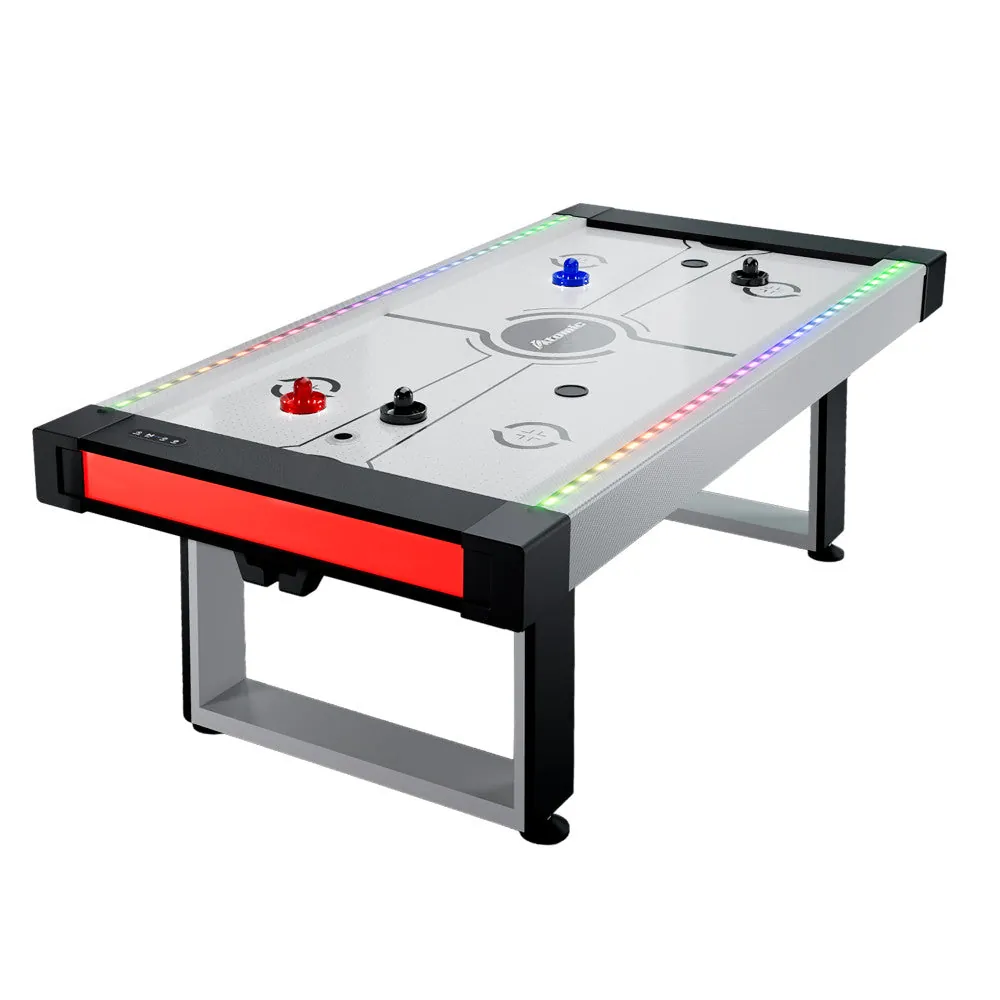
- Check level in both directions: side to side and end to end.
- Adjust the leg feet before you consider shims or moving the table.
- A slope of even a few millimeters across the playing field is enough to pull the puck.
- Let the blower run during testing, because an unlevel surface also skews airflow.
- Re-check after the first few games, since the floor and the legs can settle.
Why Leveling Matters
A tilted table pushes the puck toward the low side, so shots drift even when you aim straight. The effect is most obvious on long slides and on rebounds off the rails, where a small error gets amplified. Uneven airflow is a second cause: the air holes sit on a single plane, and when one side of the table is higher, air pools unevenly and the puck floats on some parts of the field and drags on others.
Before you start, confirm the table is actually the problem. Roll a puck from the center line toward each goal without striking it. If it consistently curves or accelerates toward one side, the table is almost certainly out of level.
What You Need
- A bubble level, ideally 24 inches or longer, or a smartphone level app as a backup
- A flat wrench or the adjustment tool supplied with the table
- Thin shims, such as plastic or hardwood cut to size, or a stack of playing-card-thick material
- A helper for the first pass, since lifting one end while checking the other is awkward alone
- Masking tape or a marker to note which legs you adjust
Steps to Level Your Air Hockey Table
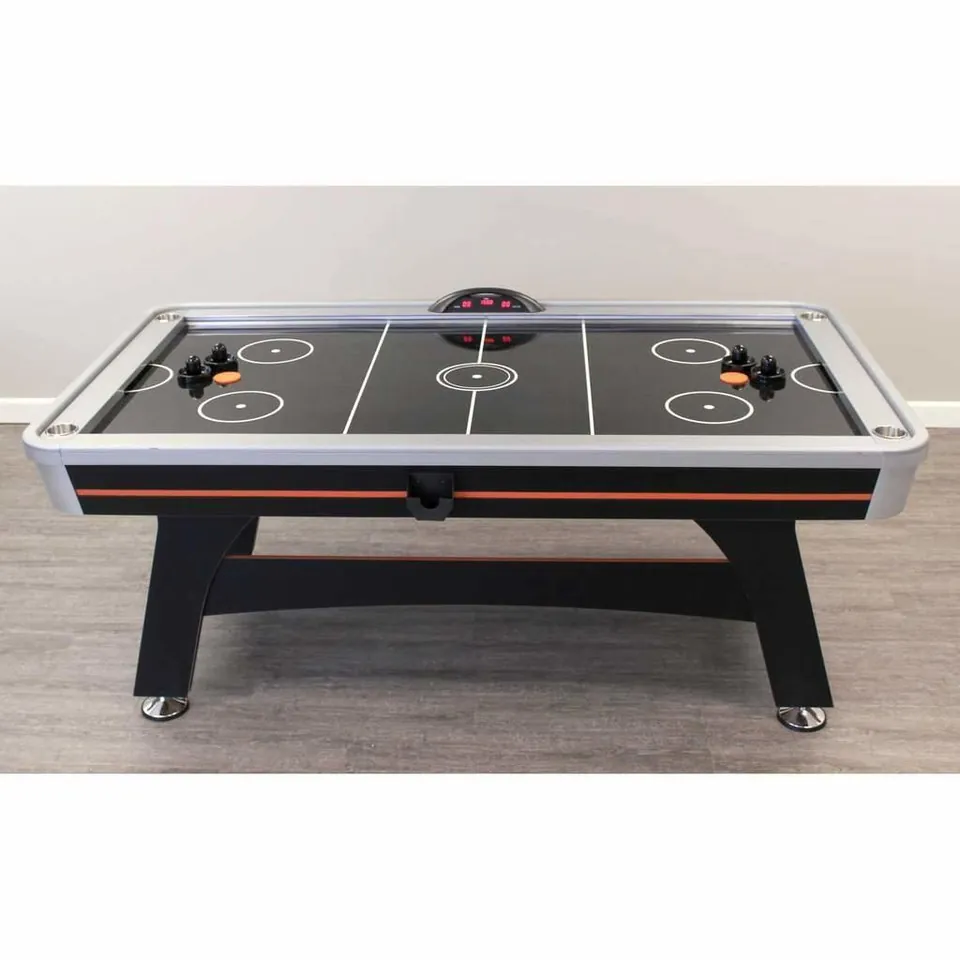
Step 1: Clear the Playing Surface
Remove pucks, mallets, and anything resting on the surface. Turn the blower off while you measure, then leave it off until the table is set, because the blower motor can shake a table enough to throw off a reading.
Step 2: Check Side to Side
Place the level across the width of the playing field, near the center. Read the bubble. If it sits off-center, the table leans toward the side where the bubble has moved. Repeat at each end and near the middle to catch a twist in the frame.
Step 3: Check End to End
Rotate the level so it runs along the length of the table. Check near each goal and at the center line. A table can be level across its width but still tilt from one goal to the other.
Step 4: Adjust the Leg Feet
Most tables have threaded leg feet. Turn the foot clockwise to raise that corner and counterclockwise to lower it. Make small quarter-turn adjustments and re-check after each one. Work diagonally: if the left side is low, raising the front-left foot and lowering the back-left foot changes the slope gently instead of bowing the frame.
Pro Tip: Make every adjustment on one leg at a time and note what you changed. It’s easy to overcorrect when you turn several feet at once.
Step 5: Use Shims Only If Needed
If the feet run out of travel before the table is level, the floor itself is sloped or uneven. Slide a shim under the low foot or leg. Shims are a fallback: they can slip, so secure them with a bit of tape and check that they don’t rock.
Warning: Don’t rely on shims alone to fix a table that’s badly racked or damaged. A frame that’s twisted or a leg that’s bent won’t stay level no matter how many shims you add, and the stress can crack the playing surface.
Step 6: Test With the Blower On
Turn the blower on and roll several pucks from the center. Watch whether they travel straight and whether they float evenly. A small residual drift is normal; a consistent pull toward one side means you need another round of adjustment.
Floor, Surface, and Placement Problems
Uneven Floors
Many leveling problems aren’t the table at all. A concrete basement floor, a sloped garage, or a carpet over a rough subfloor can each tilt a table that was level when placed. If the table keeps drifting back out of level, try moving it to a different spot or placing a rigid board, such as a sheet of plywood, under it to spread the load.
Carpet and Soft Surfaces
Thick carpet compresses under the feet, so the table sinks unevenly over time. Set the table on a hard, flat surface when possible. If carpet is unavoidable, place a solid base beneath each foot.
Table Rails and Frame
Check that the rails sit square and the frame isn’t racked. A table can look level from above but have a twisted frame. If the rails don’t line up at the corners, loosen the fasteners slightly, re-square the frame, and re-tighten before re-checking level.
How Often to Re-Level
Plan to re-check after the first week and again every few months, especially if the table moves, the floor is uneven, or the room temperature changes a lot. The table can drift as the feet settle into the floor or as the frame flexes. A quick check takes only a few minutes once you know the routine.
Troubleshooting
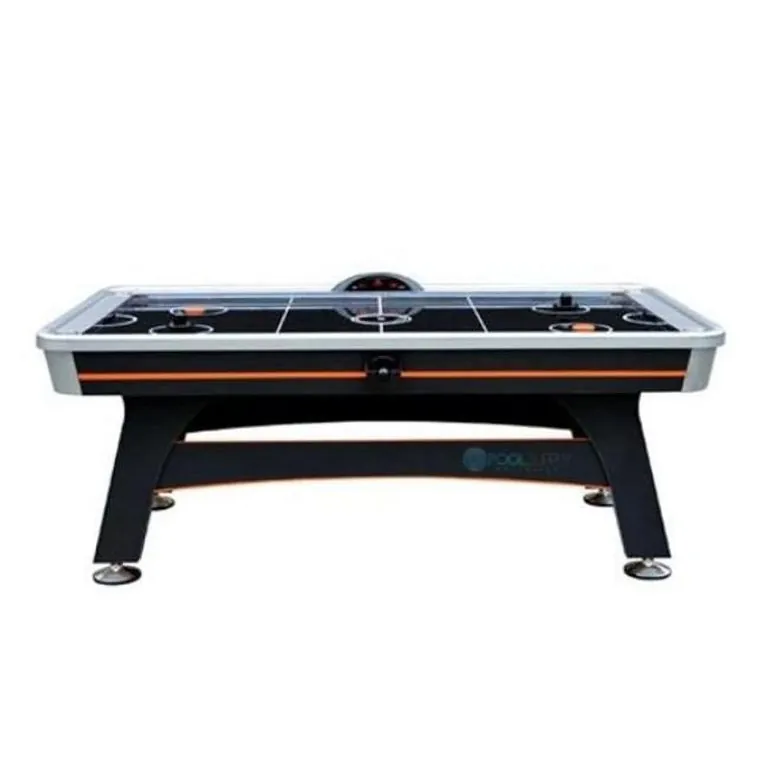
The Puck Still Drifts After Leveling
Recheck both directions with the blower running, not off. Also confirm the air holes aren’t partly blocked by debris under the surface, since blocked holes create uneven float even on a level table.
One Corner Will Not Rise
The foot may be bottomed out or the threads may be stripped. Try turning it slowly or check whether the leg is bent. If the threads are damaged, contact the manufacturer for replacement parts rather than forcing the foot.
The Table Wobbles
A wobble usually means one foot isn’t fully in contact with the floor. Tighten the feet until all of them bear weight, then re-check level. A rocking table is never reliably level.
Frequently Asked Questions
How do I know if my air hockey table is level?
Place a bubble level across the playing surface in both directions and check that the bubble is centered. Then roll a puck from the center toward each goal with the blower on. If it travels straight without curving or speeding up toward one side, the table is close to level.
Can I level an air hockey table without a bubble level?
Yes, a smartphone level app works reasonably well for this job. Lay the phone flat on the surface and check both axes. Accuracy is lower than a physical bubble level, so confirm the result by rolling pucks and watching how they travel.
Why does my air hockey table keep going out of level?
The most common cause is an uneven floor or a soft surface such as carpet that compresses under the feet. Loose or settling legs also drift over time. Move the table to a firmer, flatter spot or add a rigid base, then re-level.
Should I use shims to level my table?
Use shims only when the leg feet can’t reach a level position, which usually means the floor itself is sloped. Secure shims so they don’t slip, and avoid relying on them to correct a damaged frame or a bent leg.
How often should I check the level?
Check after the first week, then every few months or whenever the table is moved. Re-check any time the puck begins to drift or the air feels uneven across the surface.
Conclusion
Once the table is level, run a few games and listen for the puck: a straight, steady glide means you’re finished. Set a reminder to re-check in three months so the next time it drifts, the fix takes minutes rather than an afternoon.
About the Author Eric Glenn
I launched this blog to provide advanced material, guiding you towards a better and more comfortable gaming tools experience. I deliver more than gaming gear guides, and motivate people to play games and keep the fitness forever!

