
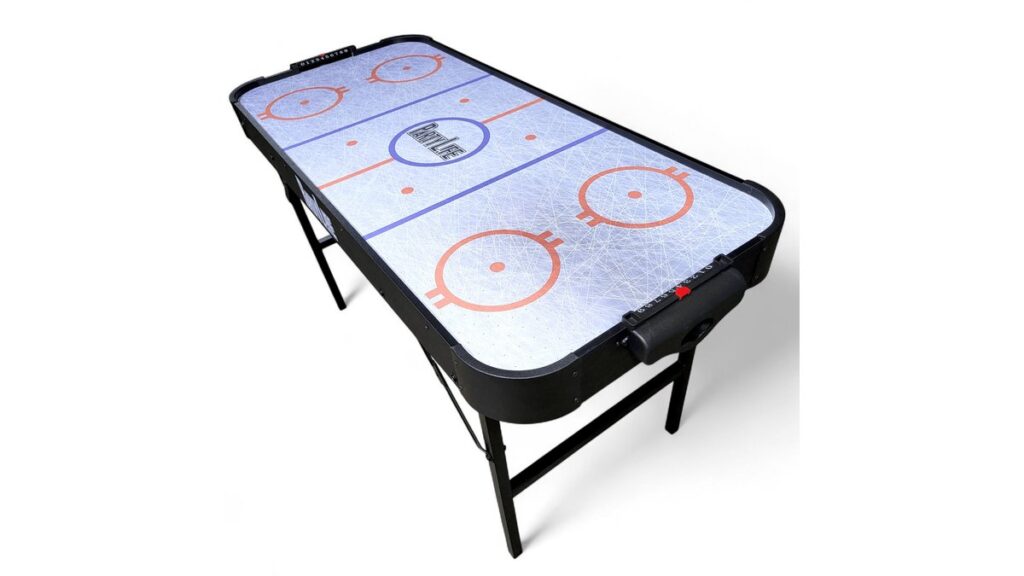
How to Store Air Hockey Table: A Step by Step Guide
Storing an air hockey table properly means cleaning and drying it, protecting the playing surface, and keeping the blower and pucks in good condition while the table sits unused. Done right, a table can be stored for months and still play like new. Done poorly, you can end up with warped playing surfaces, rusted hardware, and a blower that won’t start.
Key Takeaways
- Clean the playing surface, rails, and goals before storage, since leftover dust and moisture cause most long-term damage.
- Store the table in a cool, dry, indoor space away from direct sunlight and temperature swings.
- Keep the table flat or upright in a way that never puts weight on the playing surface.
- Remove the pucks, mallets, and any loose parts, and store them in a sealed container.
- Check the blower, lights, and scoring system before you put the table away so you don’t discover faults months later.
Why Storage Conditions Matter
Air hockey tables rely on a smooth, airtight playing surface and a steady flow of air through small holes. Anything that disrupts those two things will degrade the table’s performance. The main enemies are moisture, which can swell the particleboard or MDF base and warp the surface, and heat, which can soften plastics and loosen glued joints. Dust is a quieter problem: it clogs the air holes and settles into the blower housing.
Humidity is the biggest threat in a garage or basement. Those spaces often swing between damp and dry with the seasons, and a table stored there’s more likely to bow or develop surface problems.
Preparing the Table Before Storage
Clean the Playing Surface
Wipe the playing surface with a soft, dry cloth to remove dust and fingerprints. If the surface is sticky, dampen the cloth slightly with water and dry it immediately afterward. Avoid household cleaners, solvents, and abrasive pads, which can cloud or scratch the surface.
Clean the Rails and Goals
Use a damp cloth on the rails, then dry them. Check the goal areas and the corners of the table, where dust and small debris tend to collect.
Clear the Air Holes
Use a dry brush or a can of compressed air to clear dust from the holes in the playing surface. Blocked holes reduce air flow when you set the table up again, so this step is worth the few minutes it takes.
Remove Loose Parts
Take out the pucks, mallets, scoring discs, and any batteries from the scoring unit. Batteries should come out completely, since leaking batteries can corrode contacts inside the table.
Best Locations to Store an Air Hockey Table
The best location is a room that stays between about 60 and 75 degrees Fahrenheit (roughly 15 to 24 degrees Celsius) with moderate humidity. A spare bedroom, a closet, or an interior hallway usually works well. Avoid placing the table against exterior walls, where temperature changes are greater.
Keep the table out of direct sunlight, which can fade the cabinet finish and dry out plastic parts over time. Avoid spaces prone to flooding or leaks, such as basements with a history of water problems.
How to Position the Table
Lay It Flat or Stand It on Its Edge
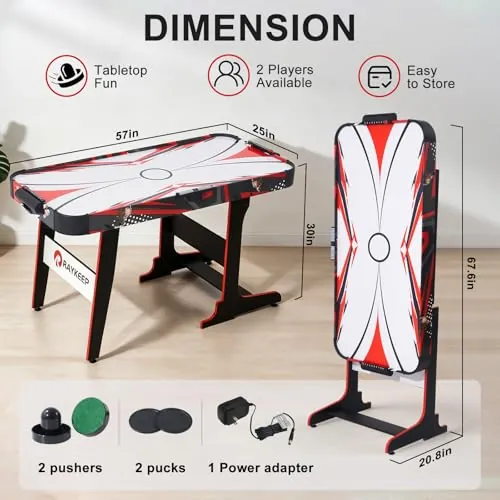
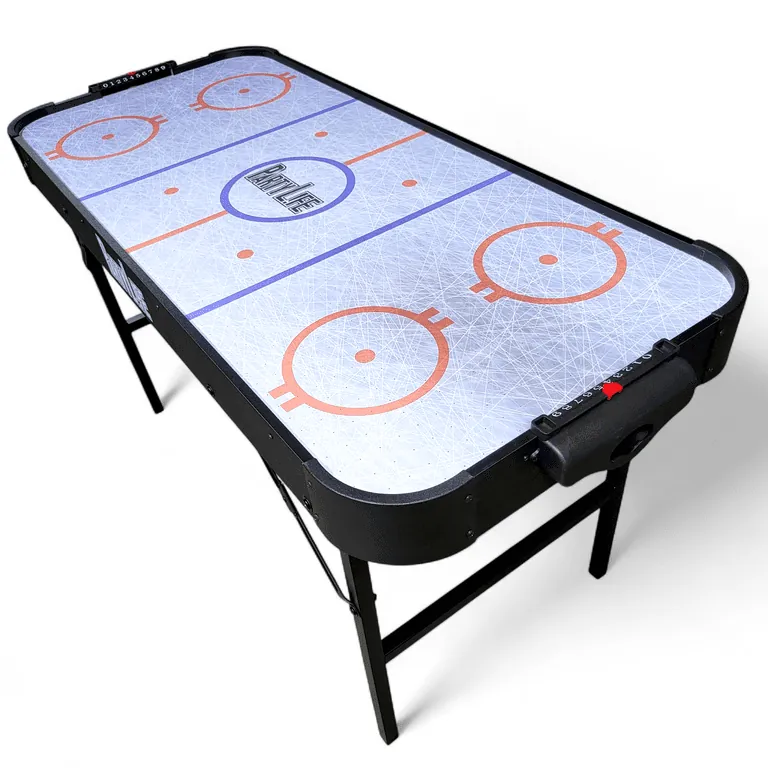
Most owners store the table flat on the floor or in a closet, with the playing surface facing up. Put a clean blanket or foam sheet underneath to protect the cabinet from scratches and to keep the base off a cold concrete floor.
Standing the table on one end saves floor space, but it can strain the legs and hinges over time. If you must stand it, support it firmly and check that nothing is pressing on the playing surface.
Never Stack Heavy Items on the Surface
Don’t put anything heavy on top of the table. The playing surface is designed to stay flat, and a stack of boxes or a heavy item can cause dents or warping, particularly in humid conditions.
Keep the Legs Secure
If your table has removable legs, take them off and store them with the table, or set them in the same location so they don’t get lost. Tighten any leg bolts so the table is stable when you bring it out again.
Protecting the Blower and Electronics
Turn the Blower Off Completely
Make sure the blower is switched off and unplugged before storage. Leaving it plugged in creates a small but avoidable fire risk and can wear out the motor.
Store the Power Cord Neatly
Coil the power cord loosely and tie it with a soft strap. Tight bends can damage the insulation over time.
Protect the Scoring Unit
If the table has an electronic scoring system, remove the batteries and store the unit in a dry place. Electronic components are vulnerable to humidity, so keep the scoring unit inside a sealed bag with a few silica gel packets.
Warning: Never store the table in a location where it may get wet, such as a shed without weather protection or a basement that floods. Water in the blower or electronics can cause shorts and permanent damage.
Storing Pucks, Mallets, and Accessories
Pucks and mallets are easy to lose and easy to damage. Place them in a labeled, sealed plastic container, and keep the container with the table or in a nearby cupboard. Store pucks dry, and don’t leave them in a hot car or a damp garage.
Keep any manuals, warranty papers, and assembly hardware in the same container. Clearly labeled hardware bags save time when you set the table up again.
Care Routine for Long-Term Storage
Check the Table Every Few Months
If the table is stored for an extended period, check it every two to three months. Look for signs of moisture, dust buildup, or pests such as mice, which may nest in cabinet corners.
Run the Blower Briefly
Once in a while, switch the blower on for a minute or two. This helps keep the motor and internal parts from seizing, and it lets you spot any unusual noise early.
Pro Tip: Put a small dehumidifier or a few moisture absorbers in the storage room if humidity is a concern. This is especially helpful in garages and basements.
Troubleshooting Common Storage Problems
| Problem | Likely Cause | What to Do |
|---|---|---|
| Playing surface feels warped | Moisture or heavy weight | Move the table to a drier room and let it sit flat for several days |
| Blower won’t start | Dust in the motor or damaged cord | Clean the blower housing and inspect the cord before reconnecting |
| Air flow is weak | Blocked air holes | Clear the holes with a brush or compressed air |
| Scoring unit is unresponsive | Corroded battery contacts | Clean the contacts and replace the batteries |
| Pucks look scratched or dull | Stored with dirt or in heat | Clean them and store them in a cooler, sealed container |
| Musty smell | Humidity or mildew | Air the table out in a dry room and wipe the cabinet with a dry cloth |
Setting the Table Back Up After Storage
Let the table adjust to the room for at least a few hours before you set it up, especially if it was stored in a cold garage. Sudden temperature changes can cause condensation.
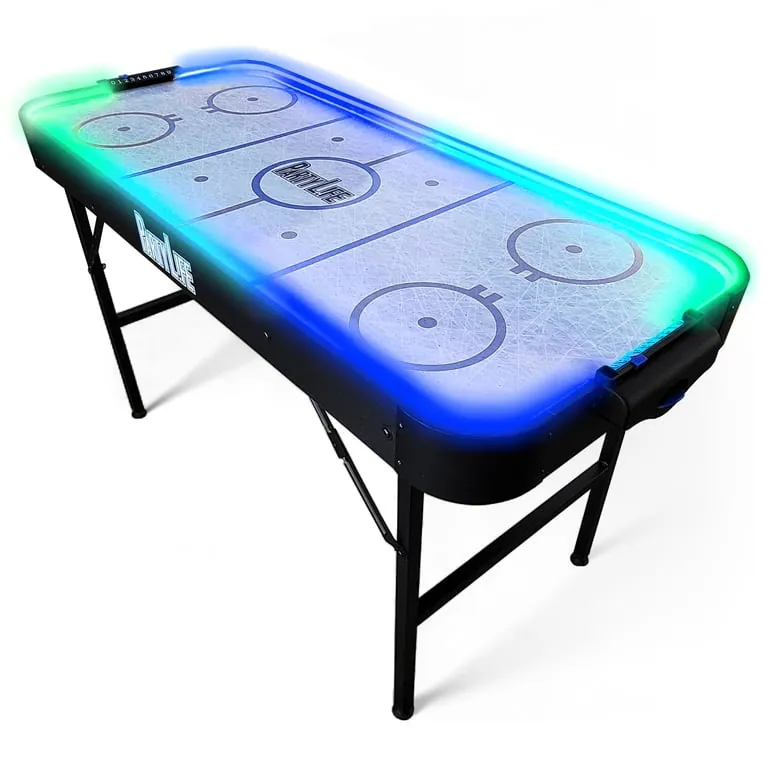
Place the table on a level floor and check that the surface is flat. Reconnect the legs, plug in the blower, and run it briefly before adding pucks. Reinstall fresh batteries in the scoring unit and check that the lights and goal sensors respond.
Related guides
Frequently Asked Questions
Can I store an air hockey table in the garage?
You can, but a garage is one of the riskier places because temperature and humidity swing widely. If a garage is your only option, keep the table elevated off the floor, cover it with a breathable cloth, and use a dehumidifier to reduce moisture.
Should I cover the table during storage?
A breathable cover is a good idea because it keeps dust off the surface. Avoid plastic sheeting that traps moisture underneath, since trapped humidity can cause problems over time.
How long can an air hockey table sit unused?
A table can sit unused for many months if it’s stored properly and cleaned before storage. Check it periodically and run the blower briefly to keep the components in working order.
Do I need to unplug the blower during storage?
Yes. Unplug the blower and coil the cord loosely. This removes the electrical risk and prevents the cord from being damaged while the table is stored.
Can I store the pucks in the table?
It’s better to remove them. Pucks left inside the table can get lost, collect dust, or shift around during moves. Store them in a sealed container instead.
Conclusion
A useful next step is to write a short storage checklist on paper: clean, clear, remove batteries, unplug, cover, and note the date. Keep it with the table so the next setup goes smoothly, and set a reminder to check on the table every few months while it’s in storage.
About the Author Eric Glenn
I launched this blog to provide advanced material, guiding you towards a better and more comfortable gaming tools experience. I deliver more than gaming gear guides, and motivate people to play games and keep the fitness forever!

